Helping uninsured patients find the right care.
A directory and guided-intake platform that turns a maze of clinics, sliding scales and eligibility rules into a few clear steps. Built for a Virginia nonprofit and in active use today.
Client name withheld at their request. We don't publish partner names in healthcare work without written permission. Discretion is part of the engagement.
Not a pilot, not a prototype. The real platform, in front of real patients.
Care exists. Finding it is the hard part.
Free and low-cost care is out there: community clinics, sliding-scale programs, nonprofit services, county funds. For the people who need it most, the obstacle isn't availability. It's navigation.
Finding the right option meant piecing together PDFs of uncertain vintage, calling numbers that may or may not still be answered, and guessing at eligibility rules written for caseworkers rather than patients. Every dead end costs time that someone who is unwell does not have.
They came to us with the problem stated plainly: meet patients where they are, show them what's genuinely available nearby, and get them to the right door without a human walking them through every step.
A triage layer between patients and the care network.
A searchable, filterable registry of free and low-cost care, organized by service type and area, structured so the nonprofit's own staff keep it current without a developer.
A short, plain-language path that captures a patient's situation in a few taps. Written for people in stressful moments, on the phone in their hand.
Intake answers are triaged against real eligibility rules to surface only the options a patient actually qualifies for, not an undifferentiated wall of listings.
Administered by a small team on a nonprofit budget: updating listings and reviewing intakes takes a browser and five minutes, not a technologist.
A look inside.
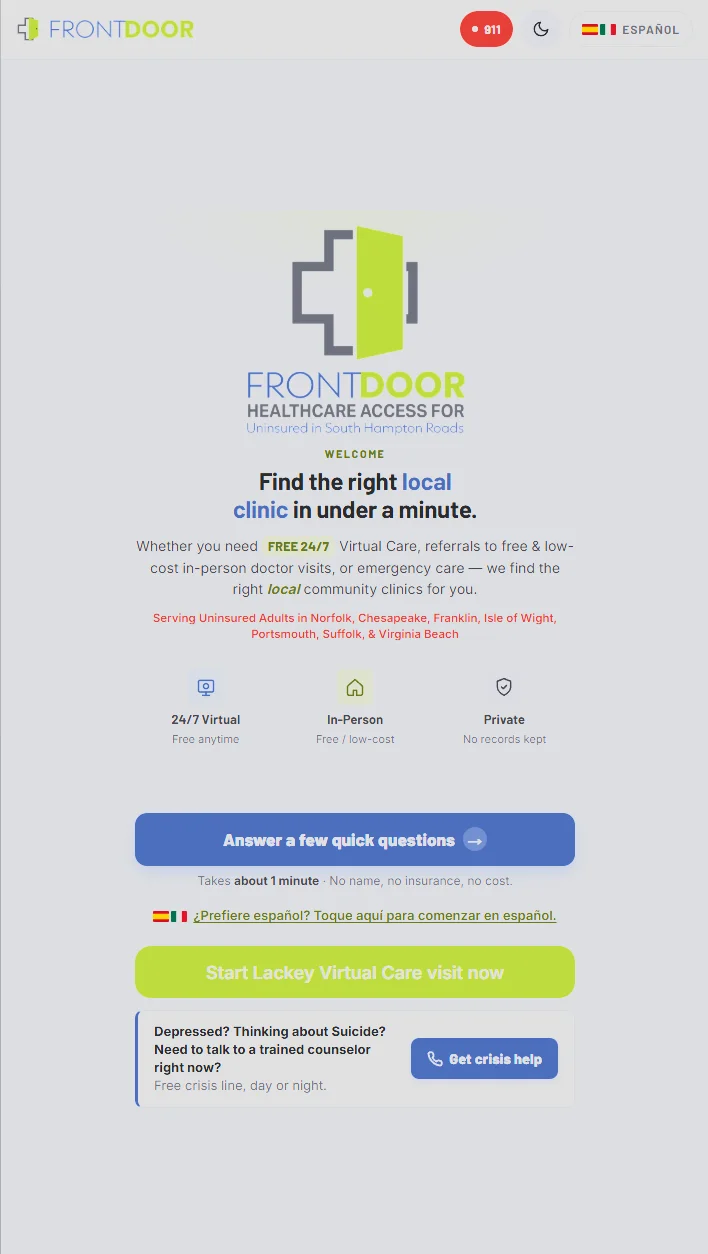
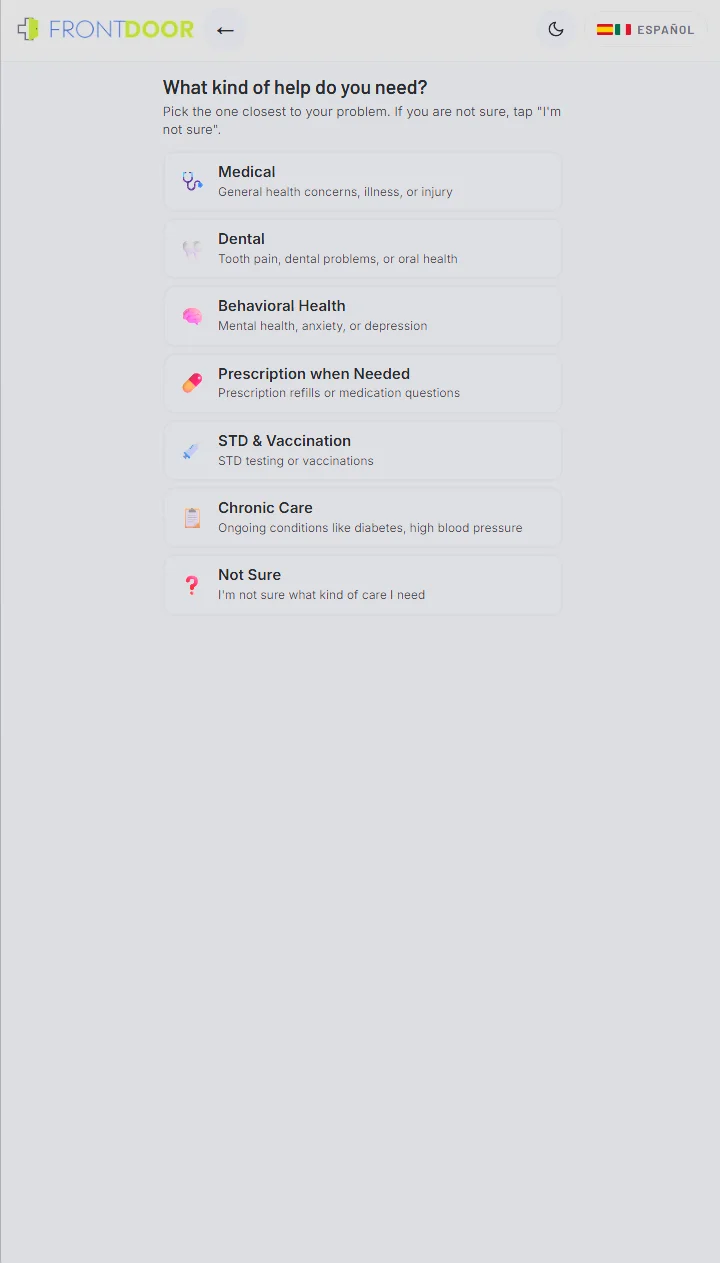
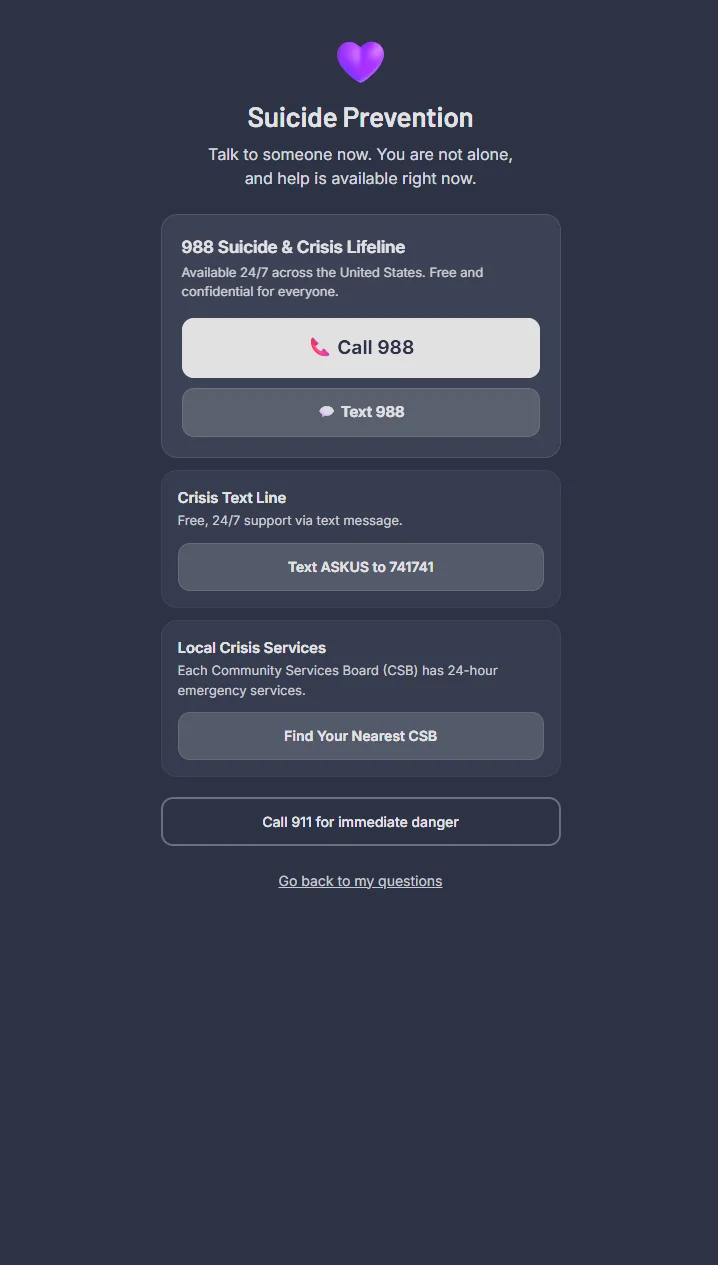
The twenty minutes of expert triage that used to require a caseworker now happens in a browser, at any hour, for anyone who needs it.